

News
How Beat the Fish Are Using AI to Track Bonuses and Silent T&C Changes Across Casinos
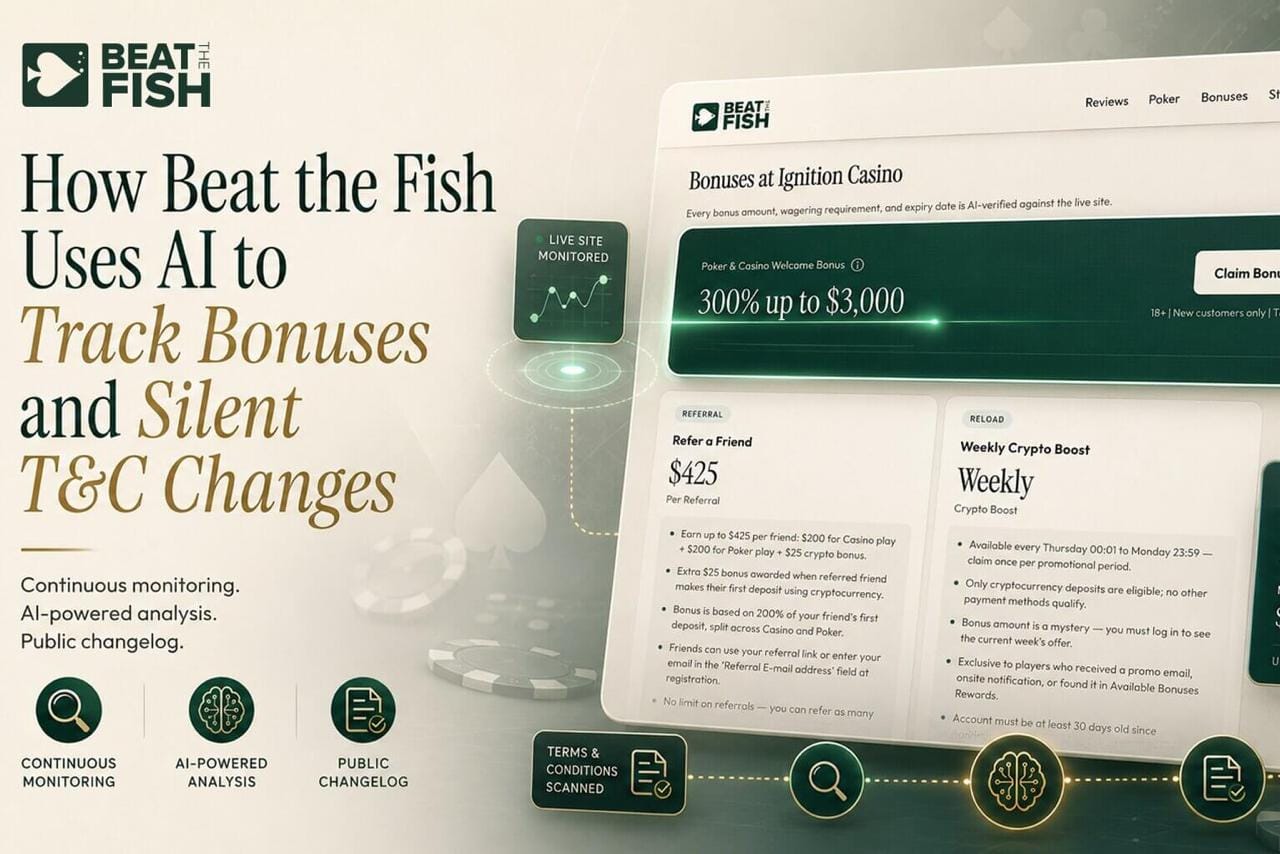
Casino welcome offers change. Constantly. A bonus that launches at 100% up to $1,000 with 30x wagering can quietly become 35x wagering six months later. The website still says 100% up to $1,000. The "last updated" date at the top of the terms page hasn't moved. The change is buried in a clause almost nobody rereads after first deposit.
For the player who deposited assuming 30x, that quiet five-point shift is roughly $5,000 of additional play-through on a $1,000 bonus. Not a small difference - and the kind of thing readers deserve to know about, but almost never do, because no one is checking.
Beat the Fish has spent the last two years building infrastructure to catch this exact pattern. I spoke to Joshua Hill, who owns the site, about how they built it, what it catches, and why most of the industry hasn't bothered.
The first question was the obvious one: why?
"What surprised us wasn't how often casinos change their bonus terms," Hill says. "It was how often they change them and update nothing else. The wagering goes up five points. The timestamp at the top of the page doesn't move. The marketing copy keeps saying what it said six months ago. We started catching it because we got tired of writing apologies to readers who'd deposited expecting one set of terms and ended up with another."
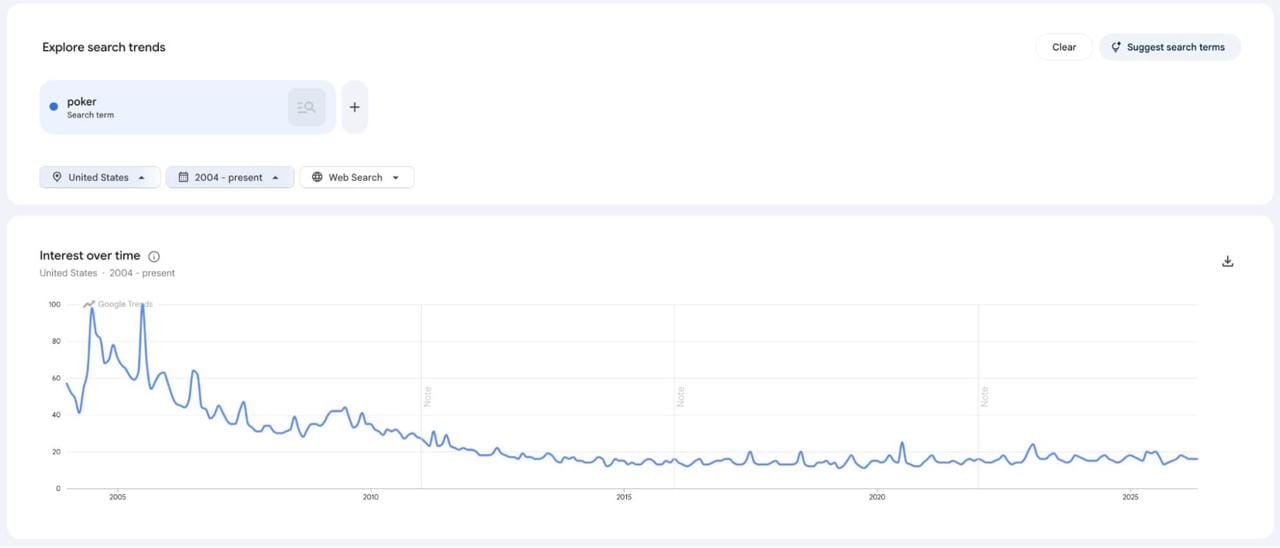
The site rebranded in March 2026, moving from its long-running identity as one of the original US poker information sites (live since 2005) to a casino publication centered on table games. Poker traffic had been in long decline. The team's expertise stretched across the broader gambling vertical, and the poker focus was hiding it.
The rebrand was the visible change. The two systems running underneath it - a continuous bonus monitor and a separate T&C tracker - are the bigger one.
I asked Hill why the technical approach uses hashing rather than running language-model analysis directly on every page.
"Cost, mostly," he says. "We track a few hundred bonus pages and terms pages. If we ran a full LLM analysis on every page every hour, the bill would be orders of magnitude higher than what we actually pay. The hash matches 99% of the time because casinos don't change their terms hourly. We only pay for the expensive part - the Claude API call that parses what specifically changed - when something has genuinely changed. That's maybe a few times a week across the whole catalog."
The full pipeline:
- ScrapingAnt fetches each page, handling the JavaScript rendering and anti-bot measures that block simpler scrapers.
- The relevant content gets hashed. If the new hash matches the previous snapshot, nothing has changed and the pipeline stops.
- When the hash changes, the Anthropic API parses the actual diff - wagering up from 30x to 35x, max cashout down from $5,000 to $2,000, a popular game just lost bonus eligibility.
- The change imports into ACF (the WordPress data layer), updating the bonus listing on the public site to reflect what the operator actually offers now.
- The change goes onto the public changelog, dated and attributed.
- Routine updates auto-propagate to the live review pages. Anything that needs editorial judgment gets flagged for human review.
I asked what the system catches most often.
"Wagering creep is the big one," Hill says. "Operators very rarely lower wagering - they almost always raise it, by two to five points at a time, with no announcement. Eligible-game changes are second most common. A casino will quietly remove a popular slot from bonus eligibility because that title has too high a contribution rate, and suddenly the bonus is harder to clear than it was last month. Maximum cashout reductions show up less often, but when they do, they tend to be substantial - a $5,000 cap dropping to $2,000 isn't unusual. The pattern is consistent. Changes that make the bonus worse for the player happen quietly. Changes that would make it better, we don't see, because they don't happen."
The T&C tracker runs the same architecture against each casino's full terms-and-conditions page. Snapshotted continuously. Diffed against the previous version. When the underlying content changes, the system catches it - regardless of whether the operator updates the "last modified" timestamp at the top of the page. Most operators don't.
That last detail is the story.
Stealth edits to casino T&Cs are routine - bonus terms, max-bet caps during play-through, eligible-game weighting, KYC requirements. The displayed update date often stays the same while the substance underneath has shifted materially. Most affiliates have no way of knowing this is happening because they're not checking. The tracker treats the operator's date metadata as untrustworthy and compares actual content.
I asked Hill why the changelog is public rather than just used internally to keep the site accurate.
"Because if we don't publish it, we're just another affiliate site that quietly updates reviews when things change," he says. "Most of the industry does that - they catch a wagering increase, they edit the review to match the new number, and the reader has no idea anything was different a month ago. That's not transparency, it's silent revision. If we say we're catching changes, the changelog is the receipt. Without it, we'd just be claiming we do something. With it, anyone can audit us."
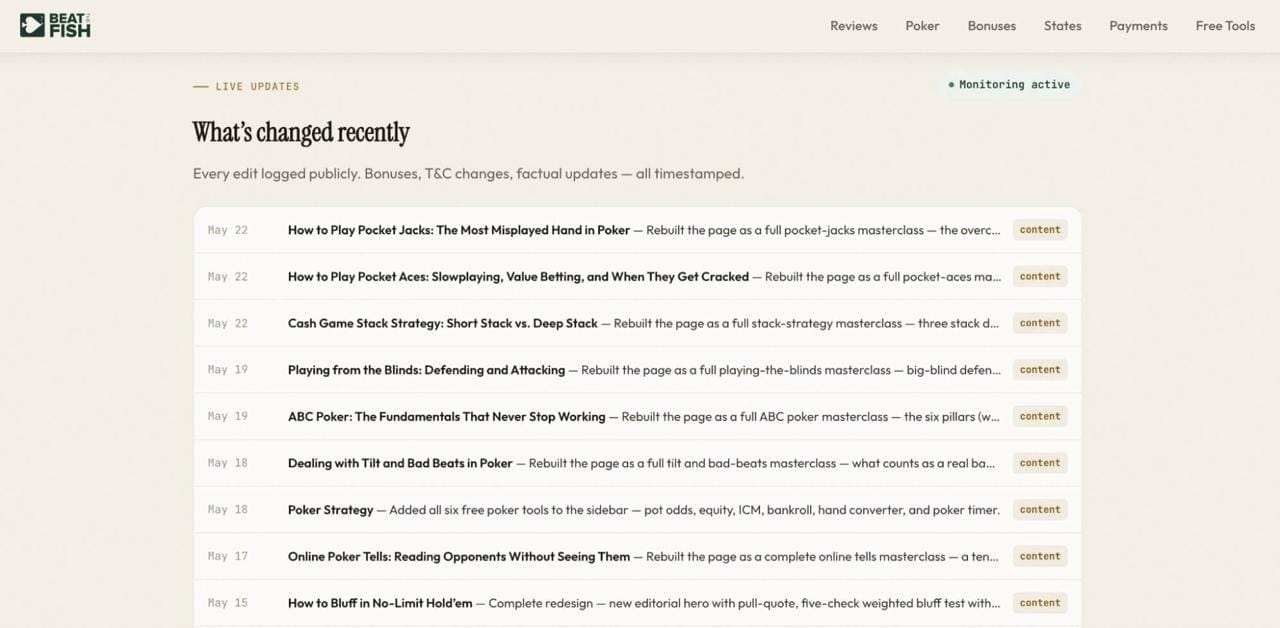
The practical use for readers is straightforward. The changelog is a dated, searchable record of every change Beat the Fish has caught on every tracked casino. Three things it's useful for:
- Before depositing on a new casino, check whether they've made meaningful changes to bonus terms recently. An operator that has quietly tightened wagering twice this year is probably about to do it again.
- Before chasing a specific bonus, verify that the terms on the public bonus page actually match what the casino is currently enforcing.
- When evaluating any affiliate review's credibility, check whether the site publishes change histories at all. Sites that never publish updates either aren't checking, or are quietly editing their reviews to match new terms without telling anyone.
That last point is the one with editorial bite. Silent revision is the industry standard. A public changelog inverts it.
I asked Hill what he expects the rest of the industry to do.
"Some affiliates will follow," he says. "Most won't, at least not until Google's algorithm or a regulator makes them. The honest version is that running continuous monitoring means publishing corrections that drop your headline bonus figures, and that's the opposite of what conversion optimization advice tells you to do. We're betting accuracy beats attraction over the long run. Other affiliates are betting it doesn't. We'll know which of us was right in three years, when the algorithm has had enough time to sort it out."
Affiliate publishing has spent a decade saying it cared about accuracy without building anything that would actually maintain it. The infrastructure that makes continuous monitoring economical has only existed long enough to be cheap to run for about eighteen months. Beat the Fish is one of the first sites to ship it. The next two years will sort out whether the rest of the industry follows, or whether the algorithm and the compliance environment make the decision for them.


Aug 14 - 6 min read
Stake Monthly Subscription Bonus Explained: Check Your Inbox, Complete the Mission, Grab the Reward
The word “subscription” usually means another monthly payment quietly nibbling away at your bank balance. Thankfully, that’s not what’s happening here.

Aug 14 - 3 min read
Win a Lamborghini Urus in Celsius Casino’s Grand Lottery
Forget free spins and bonus cash for a moment - Celsius Casino has gone full throttle with its latest promotion. This summer, one lucky player could walk away with the ultimate head-turner: a Lamborghini Urus.

Aug 13 - 3 min read
Rainbet Welcome Bonus: Get Up to $2,100 + 60 Free Spins
Rainbet is giving new players more ways to start their casino journey with a flexible welcome package featuring deposit bonuses and free spins across the first three deposits.